





We've all been there. You find something you really want, add it to your cart, and then pause. Is it worth the money? Will you actually use it? Do you need it, or do you just want it right now?
Asking yourself "should I buy it?" before making a purchase can help you avoid unnecessary spending and make choices you feel better about later. But when several factors come into play, reaching a decision isn't always easy. A little structure can make the process simpler. By looking at your budget, expected usage, and current needs, you can get a clearer picture of whether a purchase makes sense. The free Should I Buy tool helps you review these factors through a short series of questions and provides a recommendation based on your answers.How to Use the Should I Buy Tool
Still going back and forth over a shopping decision? The Should I Buy tool gives you a simple way to review your options.
Instead of relying on a vague feeling, you'll answer a few questions about the item, your budget, how often you expect to use it, and what you already own. The tool then evaluates your answers across three areas: Budget Fit, Usage Potential, and Purchase Need.
Here's how to use it.
Step 1. Enter What You Want to Buy
Start by typing the name of the item you're considering.
It could be a new phone, a pair of headphones, a coffee machine, a piece of furniture, a gaming console, or almost anything else on your shopping list.
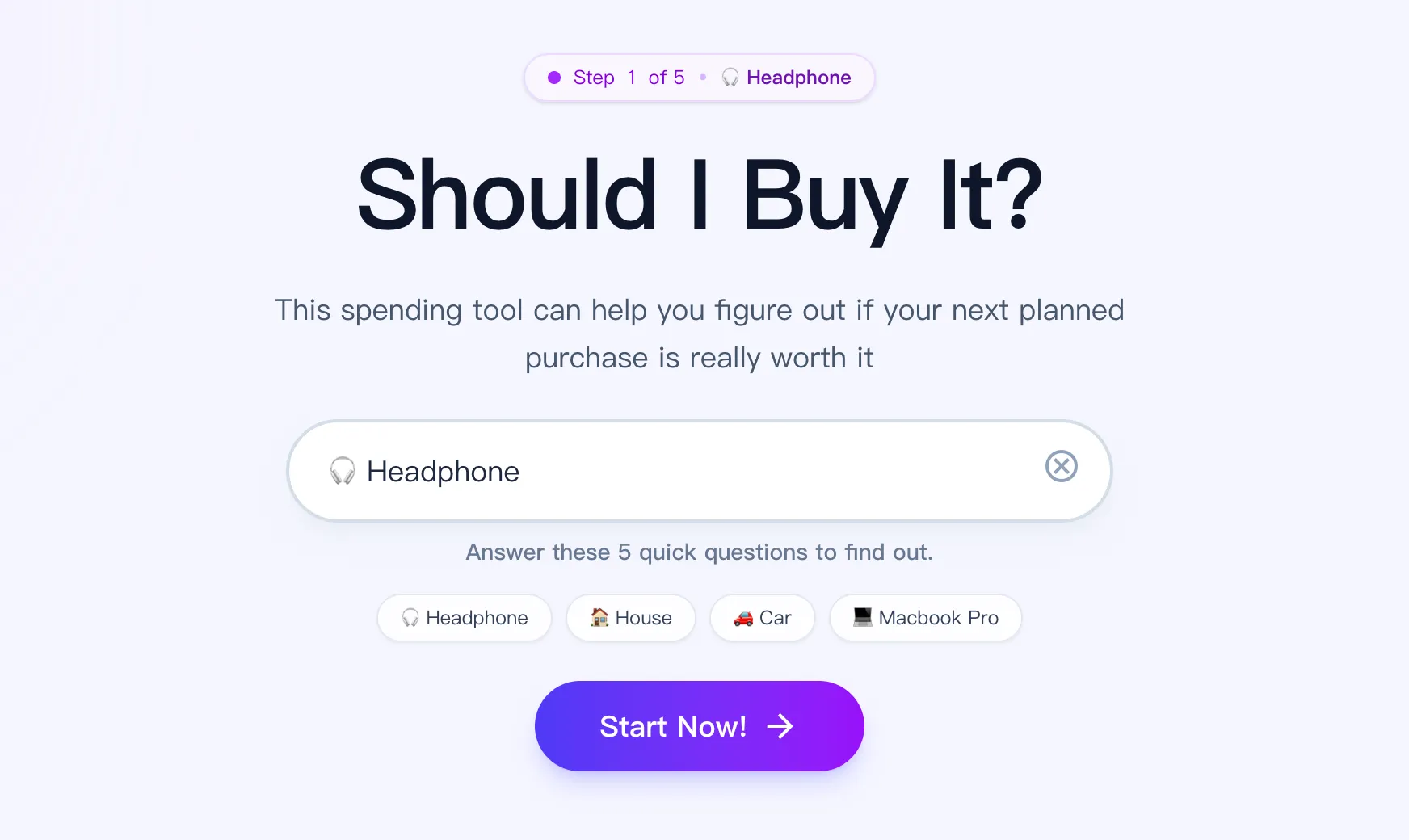
You don't need to select a product category. Just enter the item you have in mind and move on to the next question.
Step 2. Does the Price Fit Your Budget?
Next, consider how comfortable you feel paying for it.
You'll see three options:
- Totally manageable: The price fits comfortably within your budget.
- A bit of a stretch: You can afford it, but the purchase may require some adjustment.
- Over budget: Buying it would exceed what you can comfortably spend.
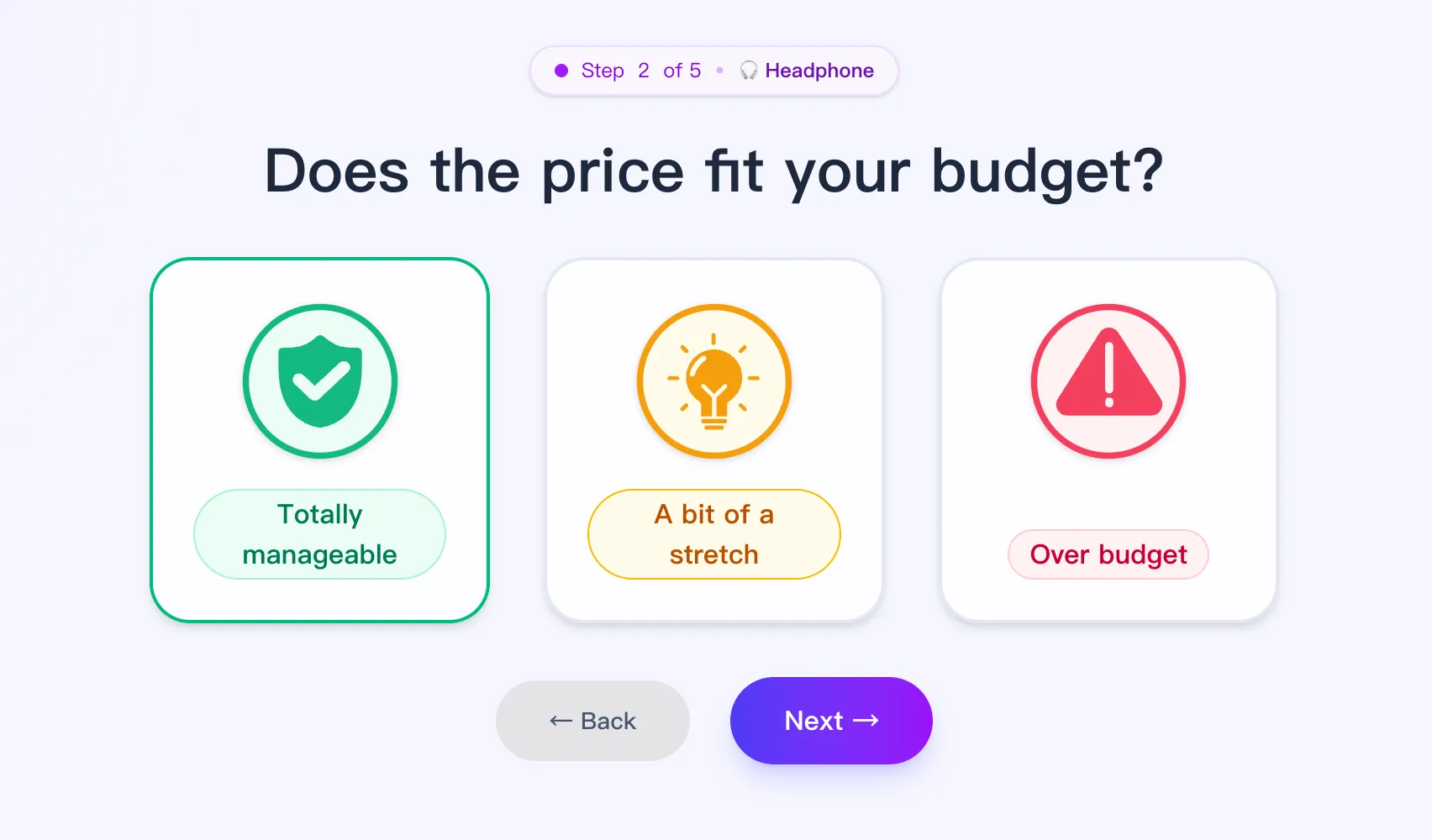
Choose the answer that best reflects your current financial situation. Be honest here. The goal is to understand the financial impact of the purchase, not to justify spending more than you planned.
Step 3. How Often Will You Use It?
Now estimate how frequently you'll use the product after buying it.
There are four choices:
- Almost every day
- Few times a week
- Few times a month
- Rarely
Think about your normal routine rather than how often you imagine using it during the first few days. A realistic estimate makes the recommendation more useful.
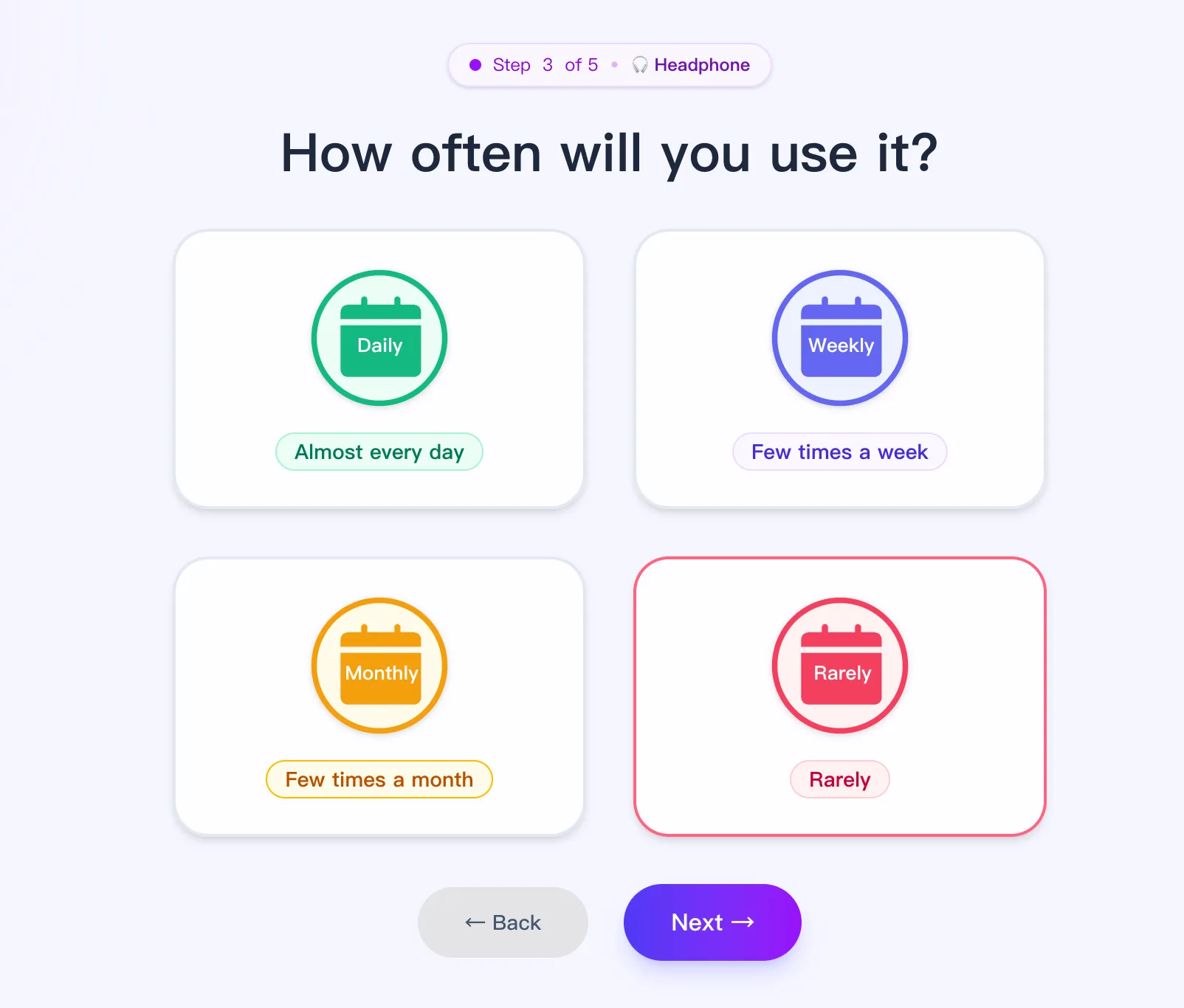
For example, a kitchen appliance you expect to use every morning has a different usage potential from a gadget you might only take out occasionally.
Step 4. Already Have Something Similar?
The next question looks at what you currently own.
Select one of these four answers:
- No, I don't own anything like this.
- Yes, but mine needs replacing.
- Yes, but this is a big upgrade.
- Yes, and my current one works fine.
This helps distinguish a first-time purchase from a necessary replacement, an upgrade, or an item you may not need right now.
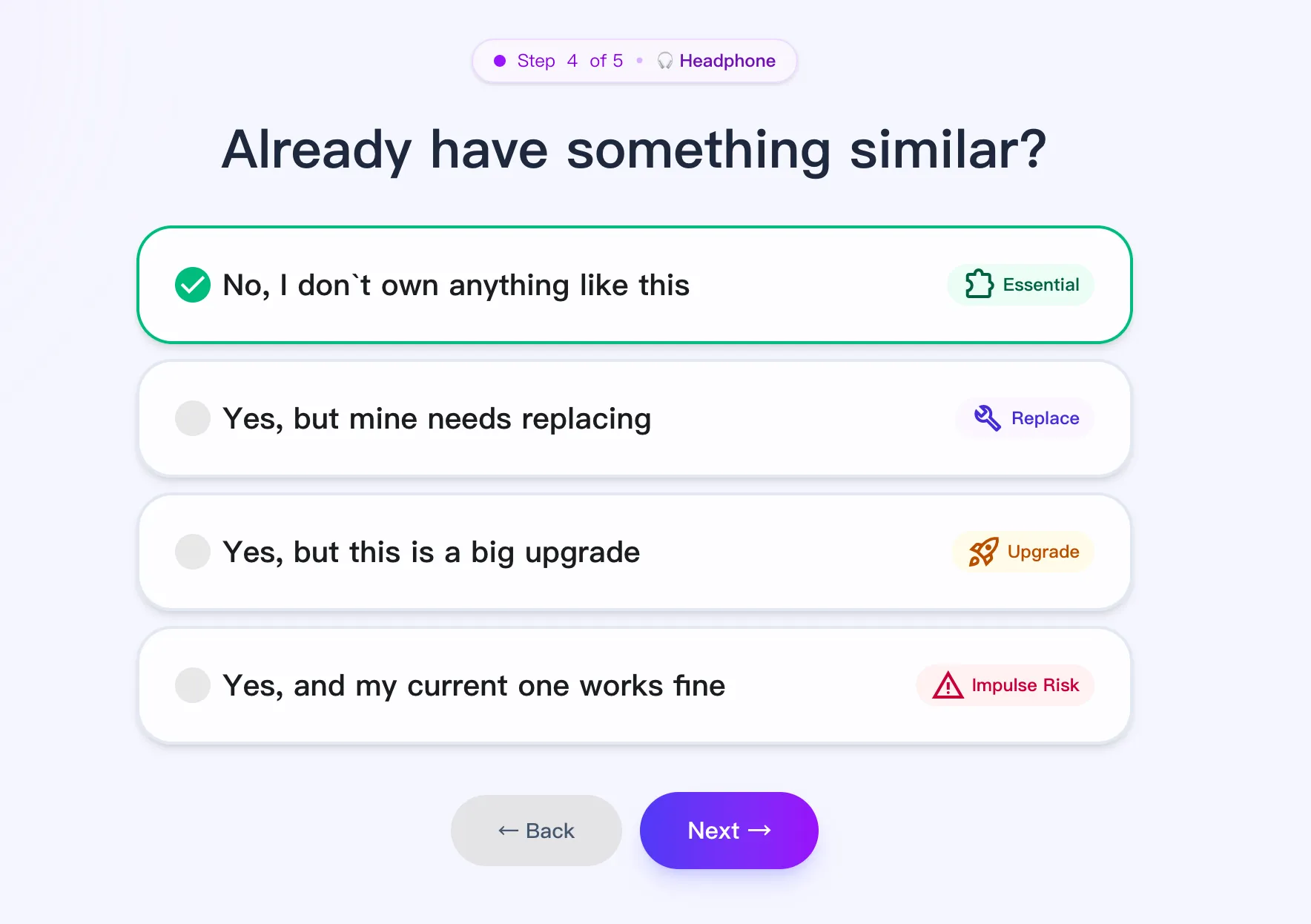
For example, replacing a broken laptop is quite different from buying another laptop when your current one works perfectly well.
Step 5. Review Your Purchase Recommendation
After completing the questions, you'll receive a recommendation based on three evaluation dimensions:
- Budget Fit: This looks at how comfortably the purchase fits your stated budget. It helps highlight whether the price is manageable or likely to put pressure on your finances.
- Usage Potential: This considers how frequently you expect to use the product. Items that fit naturally into your daily routine may offer more practical value than those you rarely use.
- Purchase Need: This evaluates your existing situation, including whether you already own something similar and if it needs replacing or upgrading.
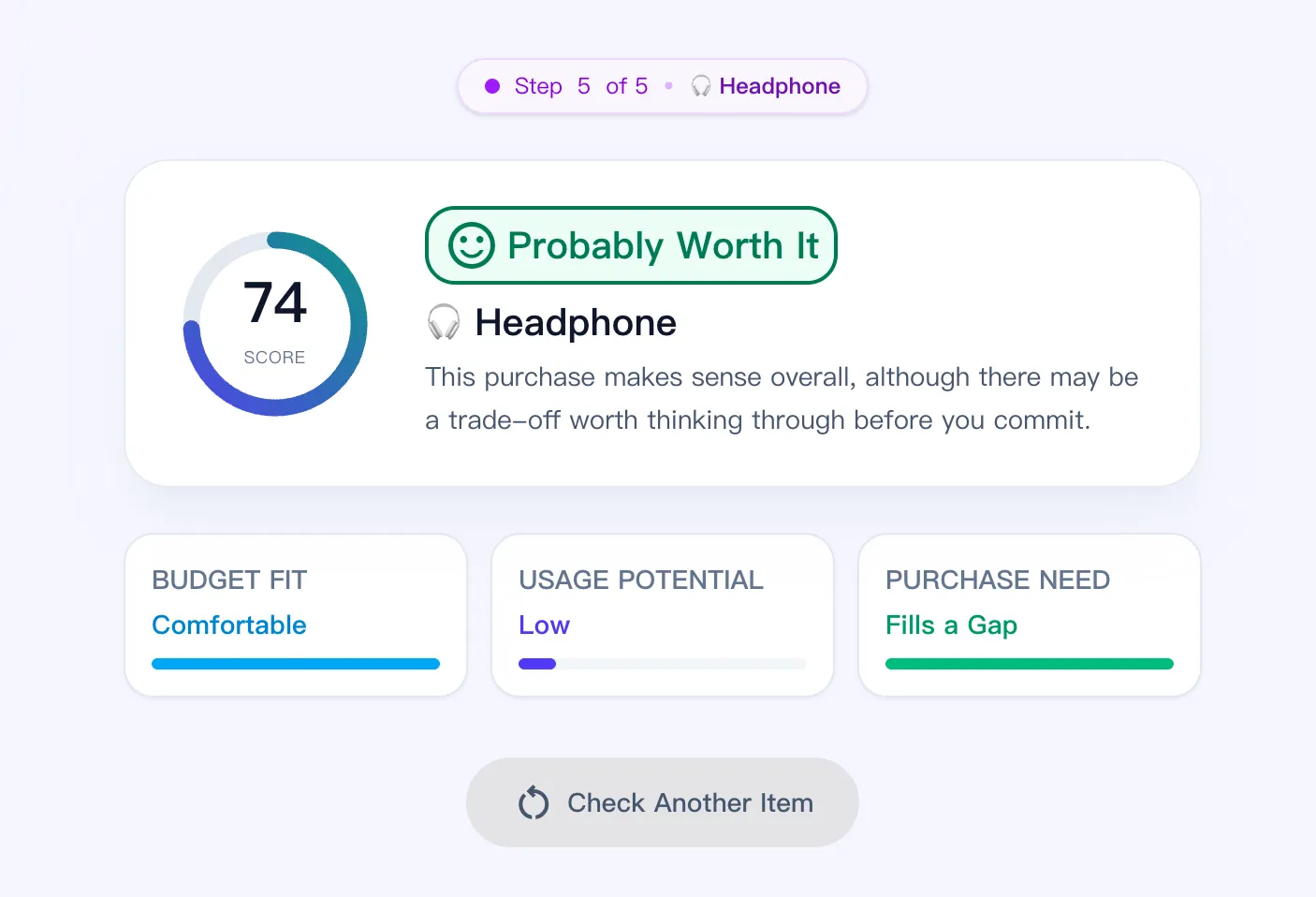
Together, these three dimensions give you a more organized view of the purchase. You can also use the Next and Back buttons to move between questions as you work through the tool.
The recommendation isn't a guarantee that a product will be worth its price. It's a starting point to help you think through the decision before spending your money.
5 Questions to Ask Yourself Before Buying Something
Before spending money, take a moment to look beyond how appealing a product seems. These questions can help you separate a genuine need from a passing impulse.
1. Can You Actually Afford It?
Start with your budget. A product might look like a great deal, but that doesn't automatically make it an affordable purchase.
Think about your regular expenses> upcoming bills, and other financial priorities. Would buying this item leave you with enough money for the things that matter?
It's also worth distinguishing between something you can technically pay for and something you can comfortably afford. If a purchase requires you to stretch your budget too far, waiting may be the better option.
2. How Often Will You Use It?
Imagine owning the product for the next few months. How often do you realistically see yourself using it?
Something you use almost every day may offer more long-term value than an item you only take out once or twice. For products you expect to use rarely, consider whether the price is justified by the occasional convenience or enjoyment.
Try to be realistic rather than optimistic. It's easy to imagine using a new gadget every day when you're excited about buying it. Your actual habits are a much better guide.
3. Do You Really Need It?
Think about what you already own. Is this your first product of its kind, a replacement for something that no longer works, or simply another version of something you have?
A new purchase may be reasonable if your current item is broken, outdated, or no longer meets your needs. An upgrade can also make sense if it offers improvements you'll genuinely benefit from.
However, if your existing product still works well, ask yourself what the new one would actually add to your life. Sometimes the desire for something new is stronger than the practical reason to buy it.
4. Is This the Right Time to Buy?
Even when a product makes sense, the timing may not be ideal.
Perhaps you're waiting for a better price, saving for another expense, or simply unsure how much you want the item. Giving yourself a little time can help you avoid purchases driven by limited-time offers or temporary excitement.
On the other hand, if you have a clear need and the money set aside, delaying the purchase may not offer much benefit.
5. What Happens If You Don't Buy It?
Finally, consider what would happen if you decided to walk away.
Would you miss something important, or could you comfortably continue with what you already have? Is there a cheaper alternative that does the same job?
If not buying the item would make little difference to your daily routine, it may not be a priority. If it would solve a recurring problem or make an important task easier, the purchase could be more worthwhile.
How to Know If Something Is Worth Buying
A purchase can look attractive at first but feel less appealing once you consider the bigger picture. Here are three ways to evaluate its real value.
Look Beyond the Price Tag
The cheapest option isn't always the best value, and an expensive product isn't automatically a poor choice.
Consider what you're getting for the price. Does it offer useful features, solve a problem, or save you time? Would a less expensive alternative meet the same needs?
A good purchase should make sense for your budget and what you expect to get from it.
Think About Long-Term Usage
Don't judge a product only by the excitement of owning something new.
Consider how it will fit into your routine over time. Will it remain useful after the initial excitement fades? Does it solve a problem you'll continue to have?
For example, a quality office chair might seem expensive initially, but daily use could make it a more practical purchase than a cheaper chair you need to replace sooner.
Avoid Buying Something You Already Have
Before upgrading, take an honest look at your existing products.
If your current headphones, phone, or kitchen appliance still does everything you need, a newer model may not make a meaningful difference. New features are only valuable when you actually need them.
However, if your existing item is unreliable or no longer suitable, replacing it can be a sensible decision.
The key is to identify what the new product will improve, rather than assuming newer always means better.
Should You Buy It Now or Wait?
Sometimes the hardest part of a purchase decision is choosing the right moment.
Buying now may make sense when:
- You have enough room in your budget.
- The product solves a problem you currently have.
- You expect to use it regularly.
- Your existing item needs replacing.
- Waiting would create unnecessary inconvenience.
Waiting may be a better choice when:
- The purchase would put pressure on your finances.
- You're not sure how often you'll use it.
- You're mainly interested because of a sale or promotion.
- You already own something that works well.
- You haven't compared other available options.
There is no universal rule for deciding when to buy. A product that makes sense for one person may be unnecessary for someone else. Your budget, habits, and priorities should guide the decision.
If you're still unsure, try stepping away from the shopping page for a day or two. If you still see a clear reason to buy it afterward, you'll have a better basis for deciding.
Let Fate Decide
Still can't make up your mind after weighing everything up? Sometimes, both options seem equally reasonable, and thinking about them any longer doesn't make the answer clearer.
In that case, try flipping a coin to break the tie. Use Flip a Coin tool for a classic Heads or Tails result, or try the Yes or No Coin Flip to get a simple Yes or No answer.
A coin flip won't tell you what's objectively best, but your reaction to the result might reveal how you really feel about the decision.
Make Your Next Purchase with More Confidence
Asking "should I buy it?" is a useful habit, especially when you're considering something expensive or unnecessary. A few minutes spent thinking about your budget, expected usage, and actual needs can help you avoid purchases you may later regret.
Want a second look at your next shopping decision? Try the free Should I Buy tool, answer a few quick questions, and get a clearer perspective before you spend.